![]() |
Podcasts | Community | Create a Podcast |
|
|
|||||||||||||||
Luna's podcastGive it a listen! |
|||||||||||||||
|
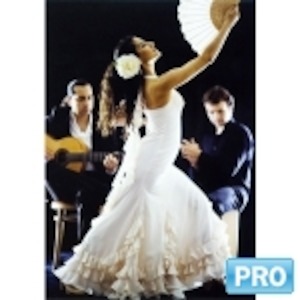
Amor Flamenco
October 17, 2007 02:31 PM PDT
For this interview Anna and I meet at the dance school. She is lovely as always but don’t get confused, dare you drop your elbows while practicing flamenco arms in class, and with one of her looks they stay up like magic. The smile comes later but the elbows stay. I am going to ask her about fusing flamenco with other dances which I know she is not very keen on, especially as she has not seen Tribal Fusion or ATS yet. Surprisingly enough I had not thought of asking her (of course everybody knows what Tribal Fusion is!). Everything is ready. I am nervous, she is my teacher and I am taking a risk here. I start with the generic questions. When did you start dancing flamenco? What was your inspiration to become a flamenco dancer? I did some flamenco when I was very young. My uncle is a flamenco guitarist, so I remember when I was probably three or something like that being with my uncle in Cordoba while he was working with a flamenco dancer, rehearsing. I remember just being mesmerised by the dancer but when I was young I wanted to be a singer or a ballet dancer so I studied ballet, and I studied jazz. And then I started doing flamenco when I was 18, 19, something like that and I just really did it because I just wanted to try something new. I did it just like as a hobby but it felt like coming home even when I just didn't know anything really about flamenco. It felt like if it was in me, it felt like there was something inside of me that recognised it and came home. I carried it on as a hobby and then my teacher here asked me to start teaching. It was nothing, I thought that my career was going that way but then I really enjoyed teaching flamenco and it just evolved. I didn't push or anything but then when I started to enjoy it, then I started to push. But I taught for many years before actually dancing flamenco, so I really properly started performing flamenco around 6 or 7 years ago and then I just kept going. Your current work involves teaching and you also have a group called Amor Flamenco. Could you tell us about your group and your type of dance? That's a really interesting question. We have our brother Jose, we used to be called Corazón Flamenco but unfortunately nobody knows how to pronounce it so we decided to call it Amor Flamenco which represents our love of flamenco, and also something in your heart, something inside. And really as far as dancers that have inspired me or continue to inspire me: Isabel Bayon, Eva la Yerbabuena, Mercedes Ruiz, Carmen Amaya, Cristina Hoyos. Many dancers have inspired me but I always hope that we are developing something, that it's art. Ultimately you express what's inside you. We have two different types of show: we have one that we call a tablao which is kind of, frenzy, with big costumes, more alegre (happy), and then we have a teatro (theater show) when we do more deep dances. Because people that pay to see a flamenco show, usually they want to see the real essence of flamenco and they understand that flamenco isn't all castanets and lots of palmas (clapping), flower in the head and all that. It's also quite jondo (deep) so we balance with those two things, because we all have that. I love dancing alegrias, I could dance alegrias for hours. They are so full of joy but then sometimes you also want to balance that with something deep that connects with people because the main thing is connecting with the audience. It's like there is a cord going between you and the audience so that they really feel something that you are doing, and also what you are doing is so much connected to how they are responding to you. Let’s talk about the roots, flamenco starts in North India... Well, no, the nomadic gypsies they started from North India, and over many, many years they migrated, as they were always migrating, but they also migrated all through Europe. Now some of gypsies ended up in Eastern Europe, in Russia, in Croatia, in Bulgaria, Rumania, and in France, all around, and then you have others that ultimately ended up in Andalucia (Andalusia, South of Spain). At that period Andalucia was controlled by the ?moors, we think of Spain now as part of Europe and is a very much a similar culture but at that time it was a very, very different culture. So the Moors had been ruling and ruled for 300 years in Andalucia, the gypsies were living, and also the Christians took over and expulsed the Moors so you had a real rich melting pot. You had the gypsies who their origins were in India, you had Jews, you had Moors, you had native Spanish people, you had lots of cultural mix in Andalucia and flamenco really was like a flower that was born of all of those things. Some of flamenco's origins are gypsy, some palos [rhythmic structure] are more in native Spanish folk music so there's lots of different origins, but in flamenco gitano (gypsy) let's say, there are certain roots which are much more raw. There is a lot of controversy after what palos originated from, gitano (gypsy), native Spanish or folkloric.. I can give you an example, like me, so my mother is Indian, my father is Spanish, so I am then what I am. I'm not Spanish pure, I'm not Indian, I'm not English pure, I'm something of all of those three and flamenco is the same. It's something from Spain, it's something from India, if you listen to Jewish music there is so many parallels... I was very lucky to work with a kathak dancer a few years ago and... increíble (it was incredible)... the parallels with kathak, the song, we had a flamenco gitano (gypsy) singing for us and an Indian singer, and the parallels were just amazing. Rhythmically we were doing the same rhythms with our feet, our arms, but I wasn't kathak and she wasn't flamenco and I couldn't dance kathak and she couldn't dance flamenco but it was like cousins, genetically you see similarities. What about fusing different styles of dancing? Tribal dance fuses different steps from different dances into one dance, what are your feelings about fusion dance? What I like about what I hear about tribal is that it calls itself “tribal”. It doesn't call itself “flamenco fusion” or “flamenco belly dancing”, it calls itself “tribal” so it's creating a new flower, like a tree, a different root so it's not flamenco but it's something that it's influenced maybe by flamenco? Or uses some movements from flamenco... that I don't have a problem with, and also, I have a bit of split because for example, I don't like to see flamenco looking like contemporary dance. It's like falling in love with someone and then all of a sudden they have plastic surgery and it changes everything about them. But as an artist I know each artist must find his or her own way of expressing and feeling good. What I object to is people feeling that they can come and take a little bit of flamenco, maybe do something and then go away and call yourself flamenco, because it's not respecting flamenco and I have so much respect for an art and anybody that understands flamenco must respect it. It's as much as an art form as ballet and with ballet you wouldn't say “Oh, I've done six weeks of ballet so I'm a ballet dancer and understand”, it's a strong discipline flamenco, I've studied ballet, and studied jazz, and flamenco is as much as a discipline any other dance. What are the basic things to bear in mind when starting to learn flamenco? Posture, you have to start with posture, and maybe in tribal is the same, you have to lift and open, because to have this feeling of high and strength in your body you have to open it. If everything is contracted and in you will never look flamenco. So I would say to start with posture because you can do so little with flamenco, you can walk, just walk with your body opened and your arms down and it would be flamenco but if you don't do that you could do so much and it won't be flamenco. Posture and where your head is, your feeling, because any technique, and I think any dance is like that, I don't know what the feeling is behind tribal for example, but in flamenco you have to connect with the music. You have to emotionally connect with yourself as well and I think that people who don't, who aren't able to do that they'll never look flamenco so I would say posture and connection with yourself and the music are absolutes. I always say to my students to listen to flamenco, the way to understand flamenco is to understand songs, flamenco is the song, and how you relate to the song. And what about the hands, is there anything specific to bear in mind, for example... the wrists? Yeah.. [laugh, one of my weak points]... it's interesting, because I've heard in tribal about this floreo, and to me that's so interesting because when I talk to my students I always say “it's like a flower” (in Spanish “flower” is “flor”; flor - floreo), and I always say “It's like a flower opening in slow motion” so I'm really intrigued by this word that is used in tribal as well. But what a lot of people mistake is they think it's the fingers, but the root of the movement as it is in Kathak dancing is the wrist; and even in other forms of dance there are a lot of similarities so it's the flexibility of the wrists and the ability to rotate so the more subtle you are in the wrist, ultimately you have great potential for doing really stunning hand movement. But it's really rotating the wrists and then working with the fingers, even if you do nothing but rotating the wrists if you do it with feeling it can look beautiful. Belly and tribal dance empower women, it's a very common theme that we all talk about, it's very empowering. Have you observed this in other flamenco dancers or in your students?
When you create a choreography, how does it start? It starts in different ways sometimes, so for example sometimes I'm here and I'm just playing around practicing things and then I think "Uhm" I get say some footwork and I think of something musical with my feet and I like that and then I think "That would work in certain palo” [rhythmic structure]. Also, often Jose and I practice together so he'll play something, he'll play something and I'll go "Oh, play that again". So sometimes it will start with something my brother will play or sometimes it will start with the musicality I've discovered in something I've created with my feet. Recommend us a singer, a dancer and a film. There is a problem with recorded flamenco music at the moment in as much as the record companies want to create something that sells... flamenco is not a mass market, it shouldn't be, it never has been and it shouldn't try to be. It's not pop music, flamenco doesn't have catchy courses, flamenco is raw, it's pure, it's almost primitive. I think, in some elements, most people don't like that. Most people when they hear "Ay, ay, ay” [she starts singing] it sounds like if somebody is crying but unfortunately the record companies now are putting a lot of pressure to have what we call flamenquito (flamenco light), easy, and even great flamenco artists if you listen to their album is horroroso (horrible). But there's a few singers, one of my favourites is Miguel Poveda, I respect him so much because I know that when everyone is offering you lots of money to do something... It's like people saying "Oh, can you do flamenco and get the audience up" and I say "No, that's not flamenco, it's degrading flamenco", if I did say yes, I'd probably work much more. But he is even in a much braver mood, he's doing something flamenco pure, it's modern, it's new, it's young but it's something with a lot of integrity. So Miguel Poveda, I think he's phenomenal. Also, if you ever can see as far as dancers Belen Maya with her partner Mayte Martin, every time I see them they have something magical, they have such a rapport and also my teacher, Mercedes Ruiz, who is so young, she's 23 but creating incredible work. Then a film... well I think a film that they would love because it really shows how many forms of dance are related is a film called “Latcho drom” by Tony Gatlif. They will see the parallels with their forms of dance and how they are related with so many others. One of the difficulties when you are starting is to distinguish the good information from the bad information. Which resources would you recommend? I have to first say my website www.flamencodance.co.uk, where I have a little page of recommended listenings. It's really good flamenco, they can also find out about classes and DVDs they can study from. Another good website is www.flamenco-world.com, it has everything, if you want shoes, if you want skirts, costumes, music... Is there something you would like to say to the readers of Tribal Magazine? To all the people that are learning tribal and all the other dance forms that are dealt with this magazine, to just always respect pure art form, to have respect for your dance and for your teachers and for your gurus in a way. And if you always respect your art form then that will transmit when you are performing, even if you are doing it as a hobby, have respect for your art and you will get the most out of it. The next class after the interview I lent her two DVDs, one of Tribal Fusion and one of ATS, and then I waited for the next class to see her response. She loved them, especially ATS: “It's like trees with the branches moving, so beautiful”. And then I smiled, the dance goddesses had given me a mission, and the mission was accomplished! Now... up with the elbows. Written by: Maria Fuertes
|
Podcast SummaryA radio show about tribal fusion dance with interviews to amazing dancers and the most wonderful people related to the world of dance. Tribal fusion, flamenco, odissi dance, sapera dance, ATS, belly dance, kathak dance, dunyavi roma (gypsy) dance, tango, shamanic dance, 5 Rhythms, experimental dance. About LunaTribal pictures by: Maria Photographer. Your donations make this podcast possible:
Your donations make this
podcast possible. Fans of this Show
Favorite LinksContact MeSubscribe to this Podcast
![]() Program Archive
|
||||||||||||||